

Display Energy Certificates: which public buildings need one and when to renew
A decision guide for public-sector facilities teams managing DEC displays, energy data and advisory reports.
 MyProperty ServicesOperated by IBR Property Services
Explore services
Show how a public building actually uses energy, with a certificate and advisory report grounded in measured consumption.
For public authorities responsible for frequently visited buildings in England and Wales, and organisations seeking a voluntary DEC.
 A clear brief. A considered result.
In England and Wales, a building generally needs a Display Energy Certificate and advisory report when it is occupied in whole or part by a public authority, has a total useful floor area over 250 m² and is frequently visited by the public. The occupier must display a valid DEC where visitors can clearly see it and hold a valid advisory report. A privately occupied building does not have the same DEC duty, although a voluntary DEC may be possible.
A DEC gives an A–G operational energy rating based on the building’s actual energy consumption, normally over a 12-month period. That makes it different from a commercial EPC, which models the energy performance of the building and its services. The accompanying advisory report identifies potential energy improvements; it does not certify that those measures have been carried out.
Tell us the building address, public authority occupier, use, approximate total useful floor area and whether visitors attend regularly. We also need to understand the available energy bills or meter readings for electricity, gas and any other fuels, the period they cover, shared or complex metering, any previous DEC and site access. An accredited assessor reviews the evidence and confirms what else is needed before the scope and price are agreed.
An assessor accredited to produce DECs must assess the building and lodge the certificate and advisory report on the official register. The first assessment requires a site visit. Once issued, the occupier should display the DEC prominently where the public can see it and keep the advisory report available. We confirm the specialist, deliverables and timetable for your building before work is arranged.
For a building over 1,000 m², a DEC lasts 12 months and its advisory report lasts 7 years. For a building over 250 m² and up to 1,000 m², both normally last 10 years. Existing documents can be checked on the government energy certificate register before commissioning a replacement.
Read the official guidance for detailed requirements and exceptions.
We’ll confirm the scope and price from the details you provide.
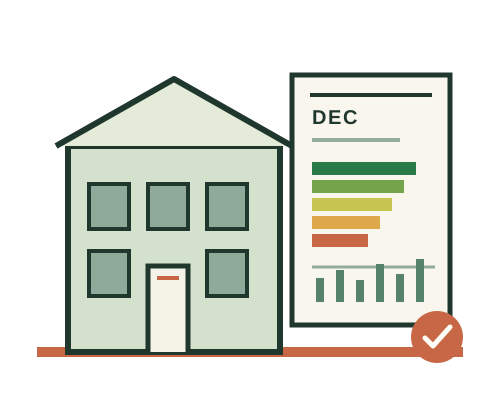
A Display Energy Certificate shows a public building’s operational energy performance from actual energy use, rather than the modelled rating used in a commercial EPC. It carries an A–G rating and is accompanied by an advisory report about potential improvements.
In England and Wales, a building occupied by a public authority, frequently visited by the public and with more than 250 m² of total useful floor area generally needs a DEC on public display and a valid advisory report. A private organisation can choose a voluntary DEC but does not have the same display duty.
Arrange an initial DEC when a building comes within the public-authority duty, and renew it before its validity ends. The assessor needs building-use information and energy bills or meter data. Check any existing DEC on the government register before requesting another.
For a building over 1,000 m², the DEC lasts twelve months and its advisory report lasts seven years. For a building over 250 m² and up to 1,000 m², both normally last ten years. The floor-area boundary matters, so confirm the total useful floor area.
The occupier may face an enforcement penalty if a valid DEC is not displayed where the public can see it or a valid advisory report is not held. The duty applies only to buildings that meet the legal conditions. Verify the building’s occupancy, area and public access before assuming it is exempt.
The timetable depends on usable energy data, metering arrangements, floor area, building use and site access. The first assessment normally includes a site visit. Shared meters or gaps in records may require further review, so we confirm the scope and timing after seeing the evidence.
Send the address, public-authority occupier, total useful floor area, previous DEC and available energy data. We can assess the likely scope, arrange an accredited DEC assessor and provide a bespoke quote for the certificate and advisory report.
A decision guide for public-sector facilities teams managing DEC displays, energy data and advisory reports.
For owners, landlords and agents preparing to sell or let a home in England or Wales.
Explore service
For shops, offices, warehouses and other non-domestic premises in England and Wales.
Explore service
For landlords and agents with gas appliances and flues provided to tenants.
Explore serviceGreat service. EPC certificate sorted within one day.
Use them for epc certificate of my flat. The assessor was polite and took time to answer my questions. visit was around 30 minutes and epc certificate of flat came through email next morning. will not hesitate to recommend them.
I used this company to get a gas safety certificate for the house I let. Great service and good communication. Gas safety certificate delivered next day. If you are looking for a gas safety certificate I shall recommend them.
Very quick turnaround. Happy with the service. I used them to get an energy performance certificate for my house that I wanted to sell.
Highly recommended if you require EPC certificates. Easy to deal with and very professional service. I booked my Epc certificate booked same day and delivered by the evening.